
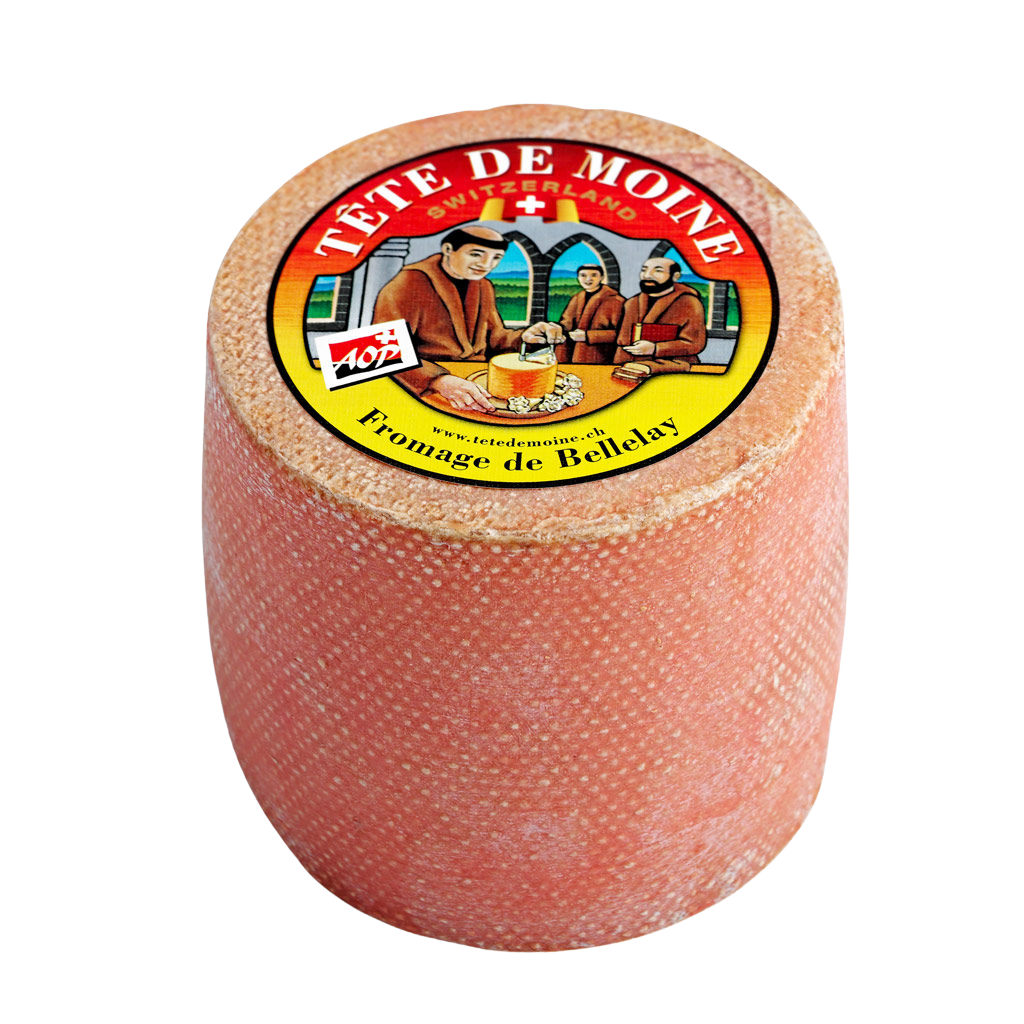
Tête de Moine, Swiss raw milk cheese with a long tradition. The Tête de Moine was invented and initially produced more than eight centuries ago by the monks of the abbey of Bellelay, located in the community of Saicourt, district of Moutier, in the mountainous zone of the Bernese Jura, the French-speaking area of the Canton of Bern.
Traditionally, the cheese is prepared for eating in an unusual way: the cheese loaf is carefully scraped with a knife to produce thin shavings, which is said to help develop scented flavours by allowing oxygen to reach more of the surface. Tête de Moine, literally as “Monk’s Head”. The name was first documented in the records of Mont-Terrible, a Department established by the French when they annexed the region from 1793 to 1799 at the time of the French Revolution.
Writings from 1292 attest that the cheese of the abbots of Bellelay had acquired such a reputation that it was used to pay the royalties of the stockbreeders to the farms’ owners, to regulate litigations, being offered as presents to the prince-bishops of Basel, or even as currency. It is made from raw cow’s milk and is characterized by a cylindrical form. It is excellent with dry white wine, after being matured for a minimum of 2½ months on small spruce plank.
| SKU | 100530 |
|---|---|
| Country | Switzerland |
| Brand | Tete de Moine AOP |
| Cheese Type | Semi-hard |
| Milk Type | Cow |
| Milk Treatment | Raw Milk |
| Weight | 0.85 |